
The Lean Shop Floor Yellow Belt Series are designed and developed in a very simple way so that the shop floor staff with little or no formal education can understand. When a staff member completes all the 8 modules he / she can be awarded a certificate.
There are 8 modules namely:
1. Apply Lean Practices
2. Apply 5S Pinnciples
3. Undertake Root Cause Analysis
4. Apply Cost Factors
5. Apply Quick Changeovers
6. Apply JIT Principles
7. Apply TPM Principles
8. Sustain Process Improvements
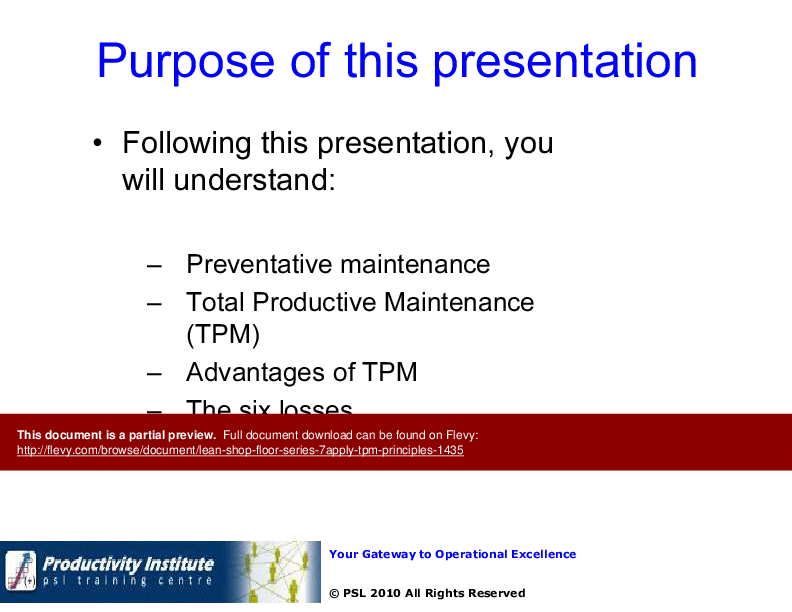
This module Apply TPM Principles covers the following topics:
Preventative maintenance
Total Productive Maintenance (TPM)
Advantages of TPM
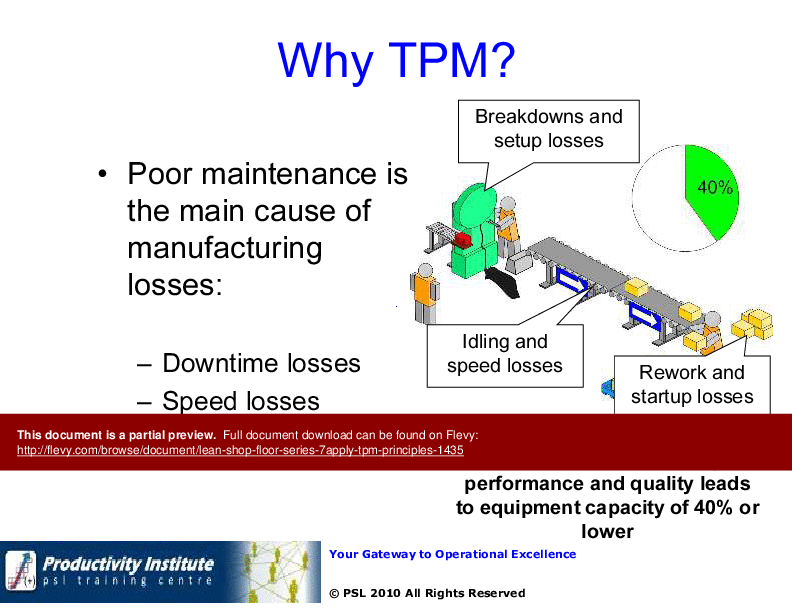
The six big losses
How to prepare for TPM
Autonomous Maintenance
Cleaning
Inspecting
Lubricating
Tightening
Making Improvements
Root cause analysis
4M/fishbone
5 whys
Recording data
Graphs
Measuring Improvements
Availability rate
Performance rate
Quality rate
OEE
*Total number of slides = 46
You can also buy all the 8 modules at a discounted price. Pl look for "Shop Floor Series – All in 1"
This comprehensive module on TPM Principles is essential for any organization aiming to minimize equipment downtime and boost productivity. It delves into the root causes of equipment inefficiencies and provides actionable strategies for autonomous maintenance, ensuring that operators are fully equipped to handle their machinery. The module emphasizes the importance of visual controls and communication strategies to maintain continuous improvement on the shop floor.

Real-world examples and practical procedures are included to illustrate the application of TPM principles, making it easier for your team to implement these practices. The focus on measuring Overall Equipment Effectiveness (OEE) ensures that you can track and quantify improvements, providing a clear ROI for your TPM initiatives. This module is a must-have for any lean transformation journey.

Got a question about the product? Email us at support@flevy.com or ask the author directly by using the "Ask the Author a Question" form. If you cannot view the preview above this document description, go here to view the large preview instead.
Executive Summary
This presentation, part of the Lean Shop Floor Series, focuses on applying Total Productive Maintenance (TPM) principles to enhance operational efficiency. It equips participants with the knowledge to implement preventative maintenance strategies, understand the advantages of TPM, and recognize the 6 major losses in manufacturing. By the end of this training, attendees will be able to significantly reduce equipment losses and improve overall equipment effectiveness (OEE).
Who This Is For and When to Use
• Operators responsible for equipment maintenance and performance
• Maintenance teams looking to enhance their operational practices
• Management aiming to foster a culture of continuous improvement
• Training departments focused on skill development in TPM
• Engineering teams involved in equipment design and functionality
Best-fit moments to use this deck:
• During TPM training sessions for new operators and maintenance staff
• As part of a continuous improvement initiative within manufacturing teams
• In workshops aimed at reducing equipment downtime and enhancing performance
Learning Objectives
• Define Total Productive Maintenance and its significance in manufacturing
• Identify the 6 major losses that impact equipment effectiveness
• Implement preventative maintenance practices to enhance equipment reliability
• Conduct root cause analysis using techniques like the 4Ms and 5 whys
• Measure improvements in equipment performance through OEE metrics
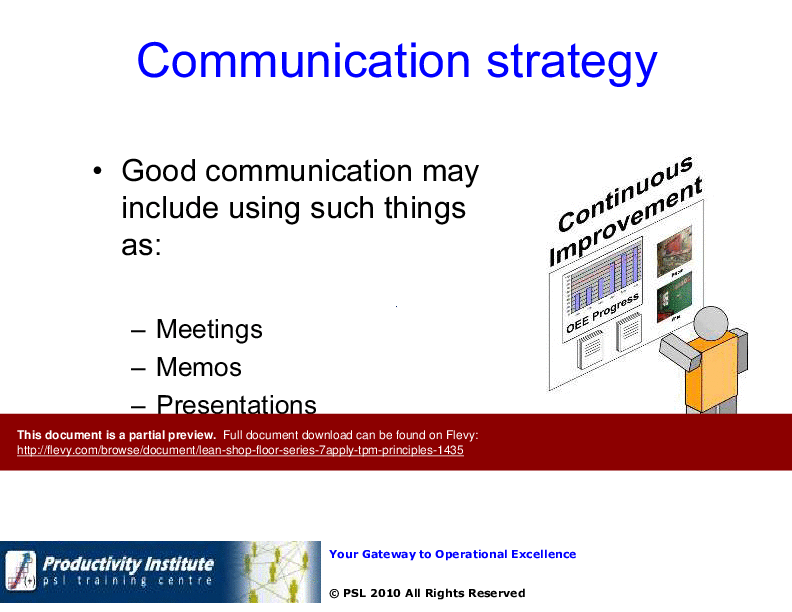
• Develop a communication strategy to engage all stakeholders in TPM
Table of Contents
• Introduction to TPM (page 3)
• Understanding Preventative Maintenance (page 5)
• The Six Major Losses (page 8)
• Benefits of TPM (page 10)
• Roles in TPM Implementation (page 12)
• Skills Required for Effective TPM (page 15)
• Communication Strategies for TPM (page 18)
• Training and Education in TPM (page 20)
• Planning for TPM (page 22)
• Measuring Improvements (page 25)
Primary Topics Covered
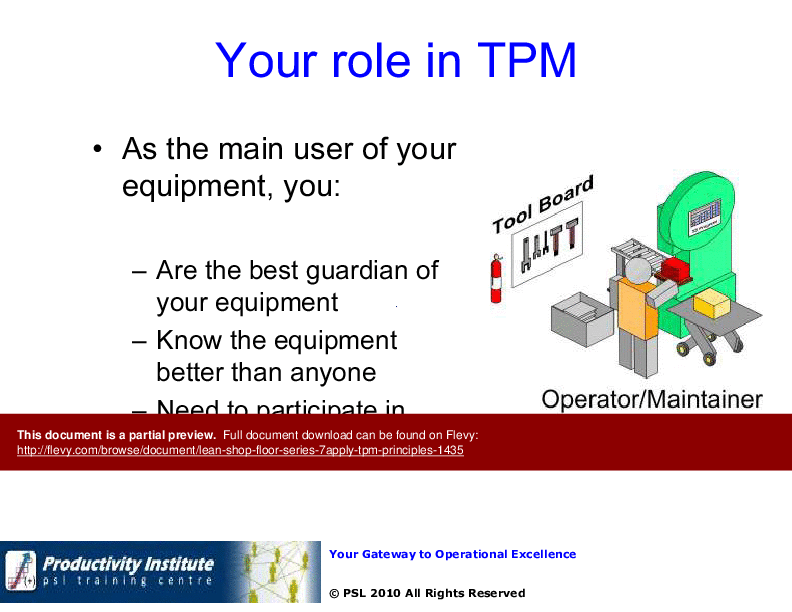
• Total Productive Maintenance (TPM) - A proactive approach where operators take responsibility for daily maintenance, leading to improved equipment reliability and performance.
• Preventative Maintenance - Strategies aimed at preventing equipment failures through regular cleaning, inspecting, lubricating, and tightening.
• The Six Major Losses - Key areas of focus in TPM: breakdowns, idling, reduced speeds, defects, setup losses, and startup losses.
• Root Cause Analysis - Techniques such as the 4Ms and 5 whys to identify and eliminate the source of equipment problems.
• Overall Equipment Effectiveness (OEE) - A metric that combines availability, performance, and quality to assess equipment effectiveness.
• Training and Skills Development - Emphasis on the importance of continuous training to improve maintenance and problem-solving skills among staff.
Deliverables, Templates, and Tools
• Daily maintenance checklists for operators
• Root cause analysis templates using the 4Ms and 5 whys
• OEE measurement tools to track equipment performance
• Communication plans for engaging all levels of staff in TPM
• Training materials for TPM workshops
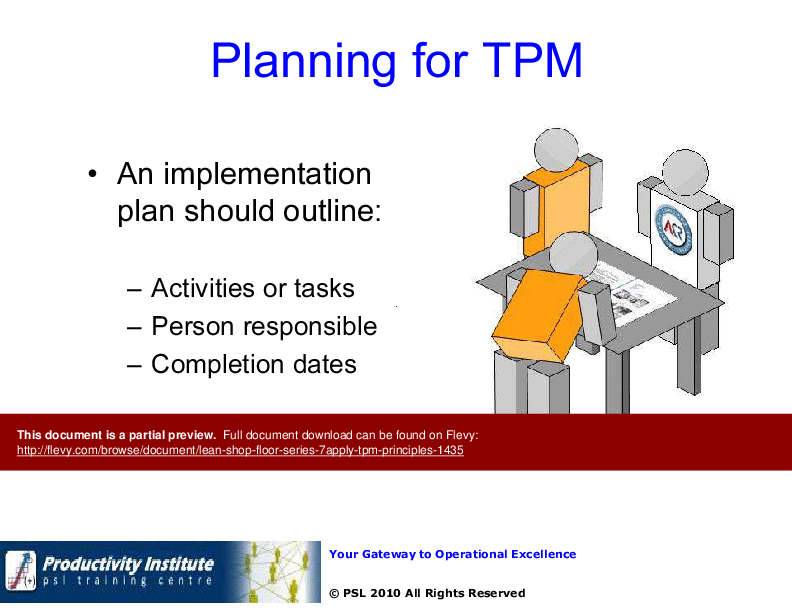
• Implementation plans outlining tasks, responsibilities, and timelines
Slide Highlights
• Overview of the 6 major losses impacting manufacturing efficiency
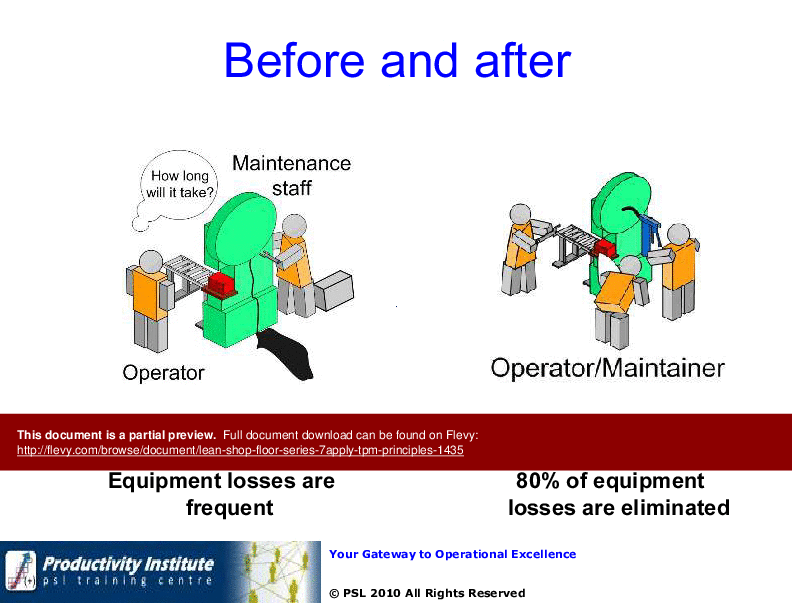
• Visual examples of equipment before and after TPM implementation
• Step-by-step guide for conducting root cause analysis
• Metrics for measuring improvements in OEE
• Communication strategies to foster engagement across the organization
Potential Workshop Agenda
TPM Introduction and Overview (60 minutes)
• Discuss the principles of TPM and its importance
• Review the 6 major losses and their impact on operations
• Engage participants in identifying current challenges
Root Cause Analysis Techniques (90 minutes)
• Introduce the 4Ms and 5 whys methodologies
• Conduct group exercises to practice identifying root causes
• Share examples of successful problem-solving in TPM
OEE Measurement and Improvement Strategies (60 minutes)
• Explain the components of OEE and how to measure it
• Discuss strategies for improving availability, performance, and quality
• Develop action plans for participants to implement in their areas
Customization Guidance
• Tailor the presentation to reflect specific equipment and processes used in your organization
• Adjust examples and case studies to align with your operational context
• Incorporate company-specific terminology and metrics for clarity
Secondary Topics Covered
• The role of 5S in supporting TPM initiatives
• Strategies for fostering a culture of continuous improvement
• The importance of cross-departmental collaboration in TPM
• Techniques for visual management in maintenance practices
FAQ
What is Total Productive Maintenance (TPM)?
TPM is a holistic approach to maintenance that involves all employees in maintaining equipment to achieve high availability, performance, and quality.
How can I measure the effectiveness of TPM?
Effectiveness can be measured using Overall Equipment Effectiveness (OEE), which combines availability, performance, and quality metrics.
What are the 6 major losses in manufacturing?
The 6 major losses are breakdowns, idling and minor stoppages, reduced speeds, defects and rework, setup and adjustment losses, and startup and yield losses.
Who should participate in TPM?
TPM requires participation from operators, maintenance staff, management, administration, engineering, and training departments.
What skills are necessary for effective TPM?
Key skills include maintenance skills, problem-solving abilities, data analysis, and loss analysis skills.
How does cleaning contribute to TPM?
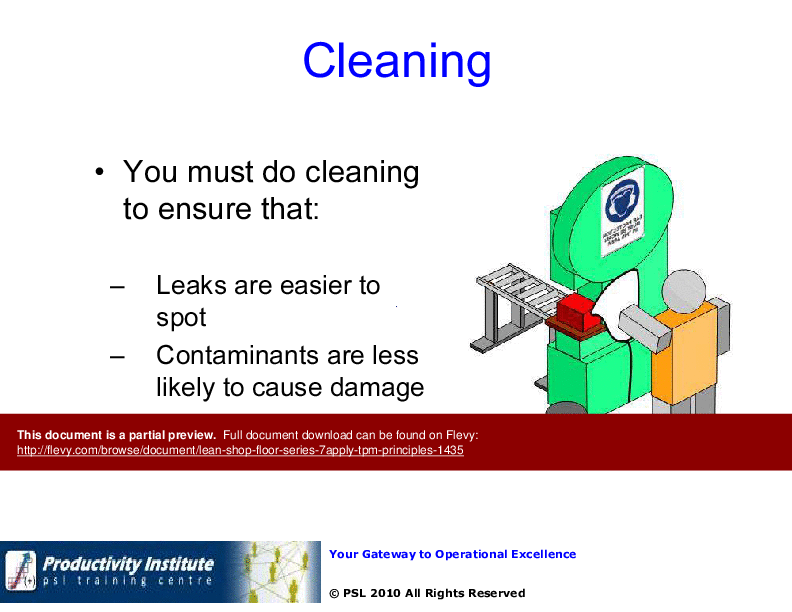
Regular cleaning helps identify leaks and hazards, reduces contamination, and facilitates easier inspections.
What is the role of root cause analysis in TPM?
Root cause analysis helps identify and eliminate the underlying causes of equipment failures, preventing recurrence.
How can communication strategies enhance TPM implementation?
Effective communication fosters engagement, ensures alignment on goals, and facilitates knowledge sharing across the organization.
Glossary
• Total Productive Maintenance (TPM) - A maintenance approach that engages all employees in maintaining equipment.
• Overall Equipment Effectiveness (OEE) - A metric that measures equipment performance based on availability, performance, and quality.
• Preventative Maintenance - Maintenance performed to prevent equipment failures.
• Root Cause Analysis - Techniques used to identify the fundamental cause of problems.
• 4Ms - Man, Machine, Method, Material; a framework for analyzing problems.
• 5 Whys - A problem-solving technique that involves asking "why" multiple times to reach the root cause.
• Six Major Losses - Key areas of loss in manufacturing that TPM aims to address.
• Visual Management - Techniques used to visually communicate information and status in the workplace.
• Cleaning - The process of removing dirt and contaminants to maintain equipment functionality.
• Lubricating - Applying lubricant to reduce friction and wear on moving parts.
• Tightening - Ensuring that components are securely fastened to prevent vibration-related issues.
• Idling - Time when equipment is not in operation, but should be.
• Setup Losses - Time lost during the setup of equipment for production.
• Defects - Products that do not meet quality standards, requiring rework or disposal.
• Downtime - Periods when equipment is not operational due to maintenance or failures.
• Performance Losses - Reductions in the speed at which equipment operates compared to its maximum capacity.
• Training - Educational activities aimed at improving skills and knowledge related to TPM.
• Communication Strategy - A plan for effectively sharing information among stakeholders involved in TPM.
• Implementation Plan - A structured outline of tasks, responsibilities, and timelines for executing TPM initiatives.
• 5S - A methodology for organizing and managing the workspace to improve efficiency and safety.
Source: Best Practices in TPM, Shop Floor PowerPoint Slides: Lean Shop Floor YB Series - 7. Apply TPM Principles PowerPoint (PPT) Presentation Slide Deck, OpEx Academy NZ
This document is available as part of the following discounted bundle(s):
Save %!
Lean Shop Floor / Yellow Belt Training Series - 8 Modules
This bundle contains 8 total documents. See all the documents to the right.
|
Receive our FREE presentation on Operational Excellence
This 50-slide presentation provides a high-level introduction to the 4 Building Blocks of Operational Excellence. Achieving OpEx requires the implementation of a Business Execution System that integrates these 4 building blocks. |